

The only way to grow in a virtue—a godly habit of the soul—is to exercise it. Love and faith are just theoretical ideas till they get used and tested, and in the testing (if we don’t abandon them!), they grow. Just like muscles which get bigger through strenuous use, the good habits of the soul need to be used to increase.
Each season of the Church calendar offers an opportunity to “work out” certain spiritual virtues. Joy and thanksgiving, for example, get exercised during Christmas and Easter, and contrition gets exercised in Lent. Some virtues, like faith, hope, and love, are trained in every season. The seasons of the Church calendar are like different athletic activities, which train different spiritual muscles, yet certain spiritual muscles are exercised in every season. Advent is a training ground for patience and hope—this season is particularly well-suited for the exercise of them.
Patience is the posture of soul that is willing to suffer in expectation of what is to come. The word patience means “suffering and endurance” at its root. When we lack something, if we wait for it without quieting our heart’s longing by grasping at something else, we are training our muscles of patience. The whole focus of Advent is geared towards this: We need the arrival of Christ, and Advent offers a moment to wait without filling that void with something else. That waiting involves suffering, because it involves living (for a season) with unfulfilled longings. This is patience!
Patience without hope is incomplete, though. A person can wait in despondency; we can suffer without the belief that we will ever be fulfilled. In Advent, because we know the certainty of Christmas, we can learn to suffer in hope. The certainty of Christmas reminds us of the certainty of Christ’s return, which means that our patience is bound together with hope. Biblical hope is not empty—it is a sure thing, the awareness that God will arrive and that in that arrival, wounds will be healed and life will abound.
Advent offers a moment to grow in patience and hope, but in order to do so, we must keep the eyes of our heart fixed on the surety of Christ’s return (and thus grow in hope) and be willing to wait without filling ourselves with other things (and thus grow in patience). Both patience and hope are essential to Christian discipleship, because they are both part of the character of Christ. When we say “yes” to the training, we can expect that the Spirit will cause the growth.
In Christ,
Steven+
Advent
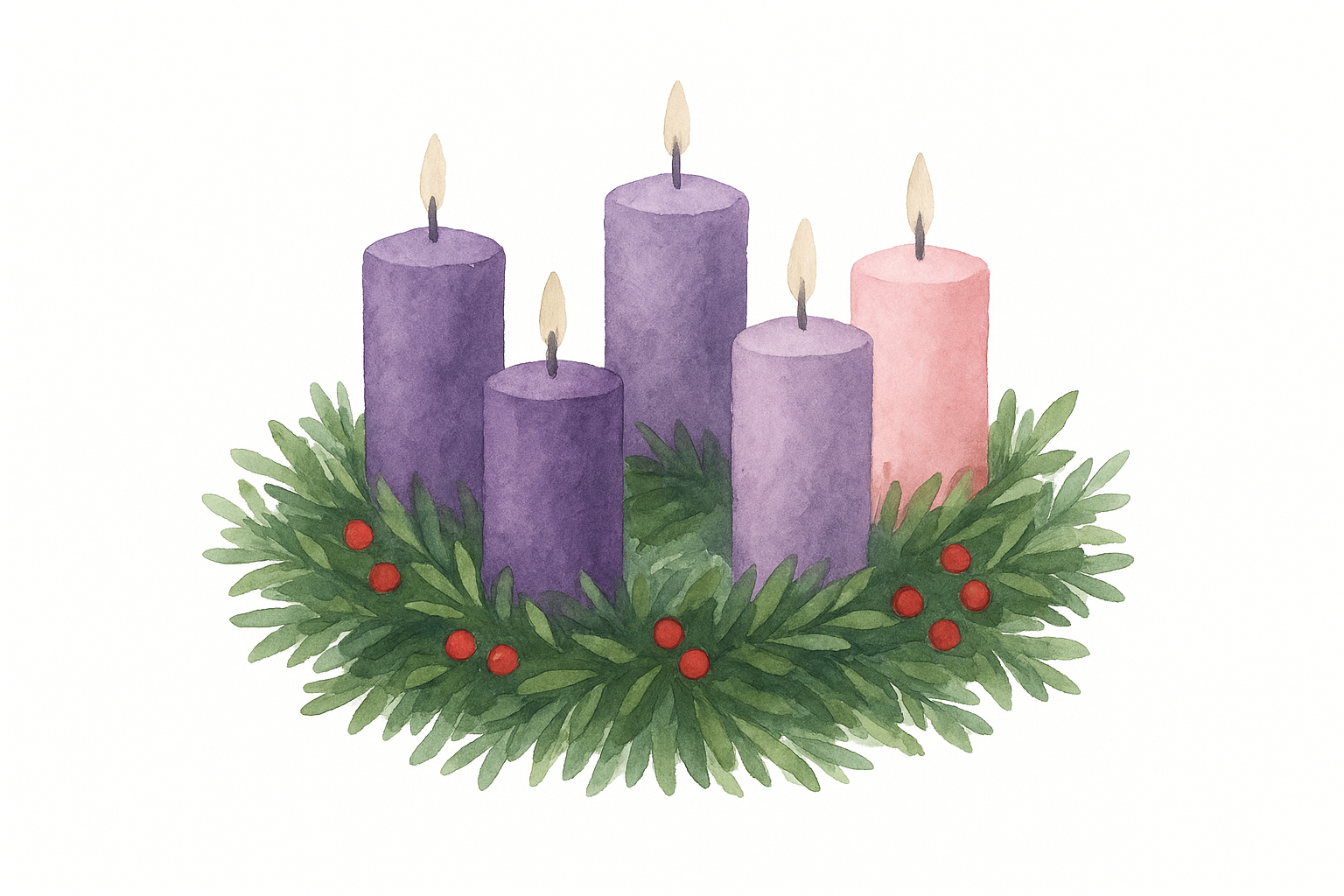
On Sunday, November 30, we enter Advent, the season of preparation that looks forward to the coming of Jesus. From a very early time in the Church’s history, Christians began to practice seasons of preparation before the great feasts. The thought was simple—we need to purposefully prepare ourselves so that we are ready for an encounter with Jesus. The two seasons of preparation (Advent and Lent) look forward to the two great feasts (Christmas and Easter). In both instances, the Church taught that preparation meant fasting and prayer.
The fast of Advent is not a deep or severe fast. It is not driven by penitence, but instead by patience, hope, and expectation. It is like waiting for a wedding banquet, which we would hardly prepare for by eating too much cheap food. Instead, we wait in modest fasting, with joy and expectation, because a feast is coming. The certainty of Christmas offers us the ability to wait in patience and hope.
But it is the return of Christ, not Christmas, that we are ultimately waiting for in Advent. The first coming is proof that the second will also arrive, and our joyful waiting for Christmas should prepare us for Christ’s return. More than anything, this is the season of the year when we should cultivate a patient longing and hope for the second coming of Christ.
Prayer in Advent should be marked by this expectation. Every prayer should be grounded in the fact that Christ will come again and restore all things. Every reading should be considered from the standpoint, “What will this mean when Christ returns?” The season offers us a particular form of discipleship—discipleship in waiting. It should be the season where, even as we learn hopeful patience, our hearts fill with the prayer, “Lord, I long for your return! Please prepare me to celebrate your arrival!”
Steven+
All Saints' Day
November 1 is All Saints’ Day. Although it is one of the seven principal feasts of the Christian calendar, it is easily forgotten because it isn’t usually on a Sunday. Some denominations, wary of abuses that can occur in the veneration of saints, don’t even regard it as a holiday. The result is that most American Christians have lost a specific day to remember, celebrate, and thank God for those who have gone before them in the faith.
A number of years ago, I had the chance to visit one of the catacombs at Rome. In the coolness and quiet, deep underground, I came face-to-face with something startling: There were places of worship next to the graves of Christians. Believers would gather at the tombs to celebrate the Eucharist from time to time as a statement that the dead were still members of the Church, that Christ was victor over death, and that the resurrection was coming.
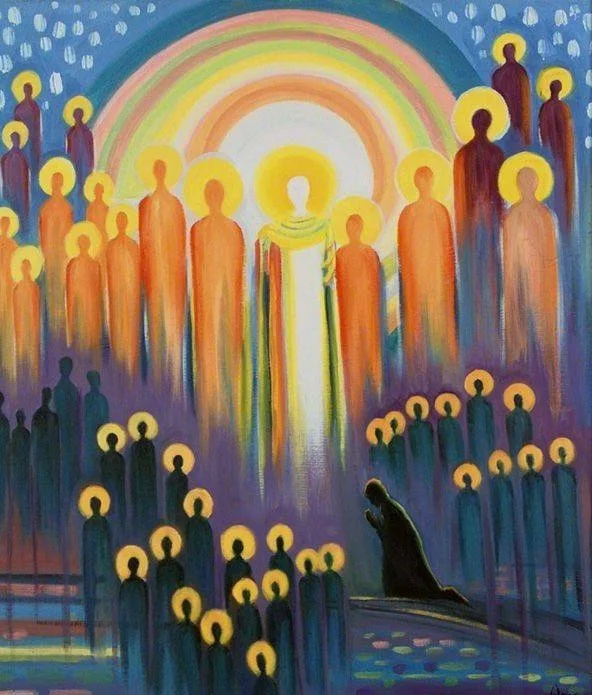
The Church is the only society on earth that never loses members. Those who have gone before us in the faith are no less a part of the body of Christ than we are. There is only one body, and it contains the Christians of all ages and times. We need moments to remember this when our view of Christianity starts to get too narrow, too influenced by America or the 21st Century. The saints from ages past worshiped differently than we do and would be rightly shocked at aspects of the American church. We also need moments to remember the entire body of Christ—the body that includes people from all over the globe and spans thousands of years—when we feel isolated or alone. We are, in the language of Hebrews 12, surrounded by a great cloud of witnesses. Joined together with them, we are a part of a great body, united across time and space in the Messiah.
All Saints’ Day is a moment to remember these things. It is a moment to grieve for the temporal loss of those who have gone before us in the faith, to remember them in thanksgiving before God, and to celebrate what God will do with them in the resurrection. Even though they are in the presence of the Lord, they are (like us) waiting for the resurrection of the dead, when we will all be joined together in our resurrected bodies in the unveiled presence of God himself.
In Christ,
Steven+