
A Christian Perspective on Death, Part 1

A Christian Perspective on Death, Part 1

This Sunday School lesson takes a thoughtful look at how Christians understand death and dying, drawing on Scripture, the historic witness of the Church, and experiences from pastoral care and hospital chaplaincy. We explore why modern culture tends to avoid this topic and how movements such as the Enlightenment and Romanticism have shaped contemporary attitudes toward mortality. The lesson introduces the historic Christian idea of Ars moriendi, reflecting on how believers through the centuries have prepared for death with courage, faith, and trust in the Resurrection. This is an invitation to consider what it means to approach death as disciples of Jesus — grounded in our identity in Him and sustained by the hope of new life.
Christ the King Sunday

Jeremiah 23:1-6 Psalm 46 Colossians 1:11-20 Luke 23:35-43

A Biblical Theology of Money, Part 2

Money is one of the most frequently discussed topics in the Bible—and for good reason. It is powerful, deeply symbolic, and one of the easiest things to trust in instead of God. In this Sunday School lesson, we look at the Old Testament’s tithes, charity laws, and debt practices before seeing how Jesus fulfills the law and invites us into a deeper, freer, and more generous way of life.

Twenty-second Sunday after Pentecost

Psalm 17 II Thessalonians 2:13-3:5 Luke 20:27-38

Twenty-first Sunday after Pentecost

Isaiah 1:10-20 Psalm 32 Luke 19:1-10

All Saints' Day

All Saints' Day

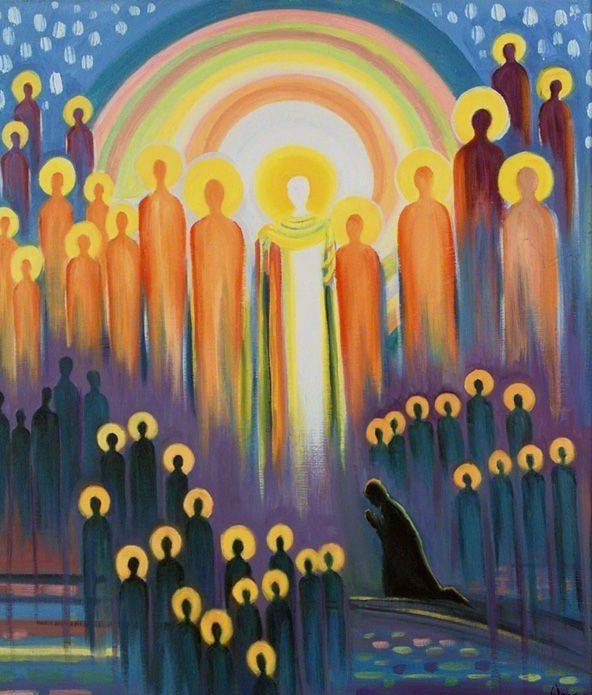
November 1 is All Saints’ Day—a time to remember and thank God for those who have gone before us in the faith. Though often overlooked, it reminds us that the Church is one body, spanning every century and nation, united in Christ. This day invites us to give thanks, to grieve with hope, and to look forward to the resurrection when all God’s people will be gathered together in His presence.

What Do Anglicans Believe About Praying for the Dead?

What Do Anglicans Believe About Praying for the Dead?

Should Christians pray for the dead? In this edition of Ask the Church, we explore what the Bible and church history say about the practice and why the Anglican church rejects the medieval idea of purgatory. We discuss the difference between prayers for the dead (seeking to shorten suffering) and prayers about the dead (thanking God for their lives and commending them to His mercy).

Twentieth Sunday after Pentecost

Jeremiah 14:7-10, 19-22 Psalm 84 II Timothy 4:6-18 Luke 18:9-14

How Can I Resist Temptation and Stay Faithful?

How Can I Resist Temptation and Stay Faithful?

How can Christians resist temptation and stay faithful? This edition of Ask the Church explains the three sources of temptation— the world, the flesh, and the devil— and the two biblical responses: resistance and flight. It also explores why prayer and fellowship with other believers are essential in the struggle against sin.

Nineteenth Sunday after Pentecost

Psalm 121 II Timothy 3:14-4:5 Luke 18:1-8

Why Should Christians Confess Their Sins to a Priest?

Why Should Christians Confess Their Sins to a Priest?

Why should Christians confess their sins to a priest? In this edition of Ask the Church, we explore why the Bible assumes confession happens in community and how God works through others to assure us of His forgiveness. Drawing on James 5 and John 20, we learn how Jesus entrusted His Church with the authority to declare forgiveness and how Anglican priests exercise that ministry.

Eighteenth Sunday after Pentecost

Psalm 113 2 Timothy 2:1-15 Luke 17:11-19

Who Can Serve on the Vestry—and How Are They Chosen?

Who Can Serve on the Vestry—and How Are They Chosen?

Who can serve on the vestry of an Anglican church, and how are they chosen? In this edition of Ask the Church, we endeavor to explain the role of the vestry in church governance, its historical roots, and the different models Anglican churches use today. We also explore the biblical and diocesan criteria for those nominated to serve on our vestry, and how prayer shapes the final selection.

Seventeenth Sunday after Pentecost

Habakkuk 1:1-13; 2:1-4 Psalm 37:1-17 2 Timothy 1:1-14 Luke 17:5-10

Why Do Anglicans Use Real Wine at Communion?

Why Do Anglicans Use Real Wine at Communion?

Why do Anglicans use real wine at Communion rather than grape juice? In this edition of Ask the Church, we trace the story from the temperance movement and the invention of pasteurization, to the historical reasons Port became common in Anglican churches. We also address the question of what to do if you struggle with alcohol or gluten, and discuss why, if receiving only bread or only wine, we still participate fully in Communion.

Sixteenth Sunday after Pentecost

Psalm 146 1 Timothy 6:11-21 Luke 16:19-31

Do Anglicans Believe in Purgatory?

Do Anglicans Believe in Purgatory?

Do Anglicans believe in Purgatory? Article XXII of the Anglican Articles of Religion rejects the medieval doctrine as “repugnant to the Word of God.” But that doesn’t end the conversation. In this edition of Ask the Church, we explore what Anglicans believe about Purgatory, why Christ’s sacrifice on the cross is sufficient, and how God’s sanctifying work continues in the lives of His people.

Fifteenth Sunday after Pentecost

Amos 8:4-12 Psalm 138 Luke 16:1-13

Do Anglicans Believe in Transubstantiation?

Do Anglicans Believe in Transubstantiation?

Do Anglicans believe in transubstantiation? This edition of Ask the Church explores why Article 28 of the Anglican Articles of Religion rejects the Roman Catholic doctrine of transubstantiation, while still affirming that Christ truly offers His Body and Blood in the Eucharist. Drawing on the Anglican idea of “efficacious signs,” we see how the Sacrament both signifies and accomplishes what it promises (Christ's "Real Presence" in the Eucharist). Rather than speculating about how the mystery works, Anglicans emphasize the gift itself: Jesus offering Himself to us in the Eucharist.

The Ministry of Clergy and Laity

The Ministry of Clergy and Laity

This fall in Sunday School, we are taking a deep dive into some of the most frequently asked questions that have been sent in for Ask the Church. In this first session, we look at the biblical and historical roots of ordination—what it means to be a bishop, priest, deacon, or lay person—and why these roles matter. Far from being “super-Christians,” clergy exist to equip the whole body for ministry. Every believer is called, gifted, and empowered by the Holy Spirit to serve God, one another, and the world.